
White Powder on Stucco in Miami? What to Check Before You Repaint
White powder near the bottom of a stucco wall can come from salts left behind as moisture dries, or from the old paint itself wearing down. Start by looking at where the patch is and whether it comes back after rain, sprinklers, or cleaning. If the same area keeps turning white, check for a moisture source before repainting.
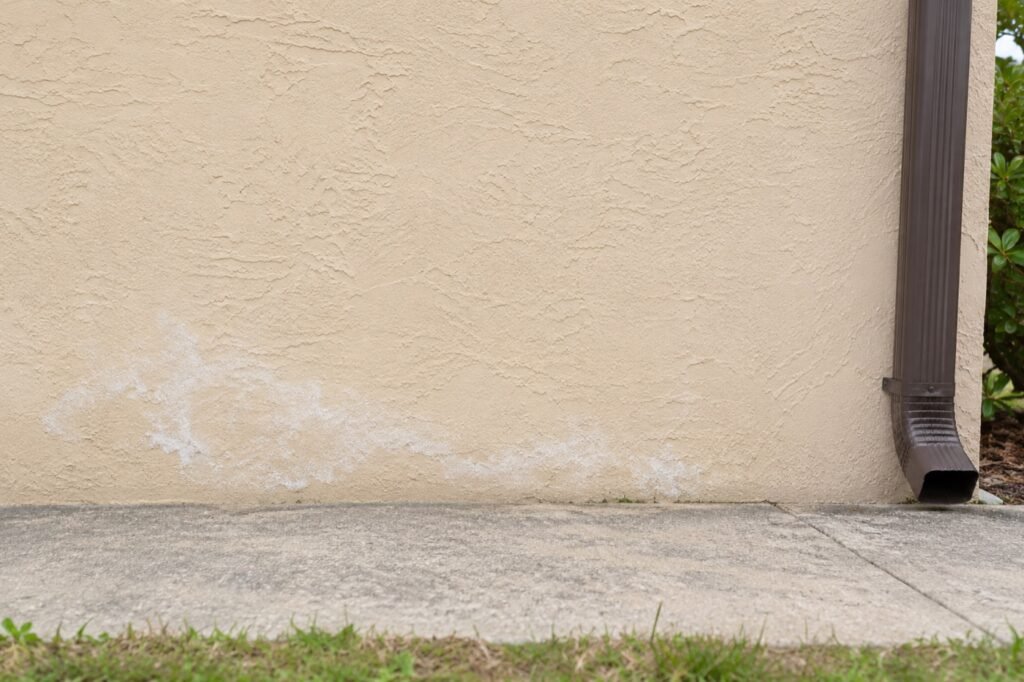
Opening image: AI illustration. A low white patch and a nearby downspout give you two things to photograph. The picture alone can’t tell you where the moisture came from.
Is it a salt deposit or chalky paint?
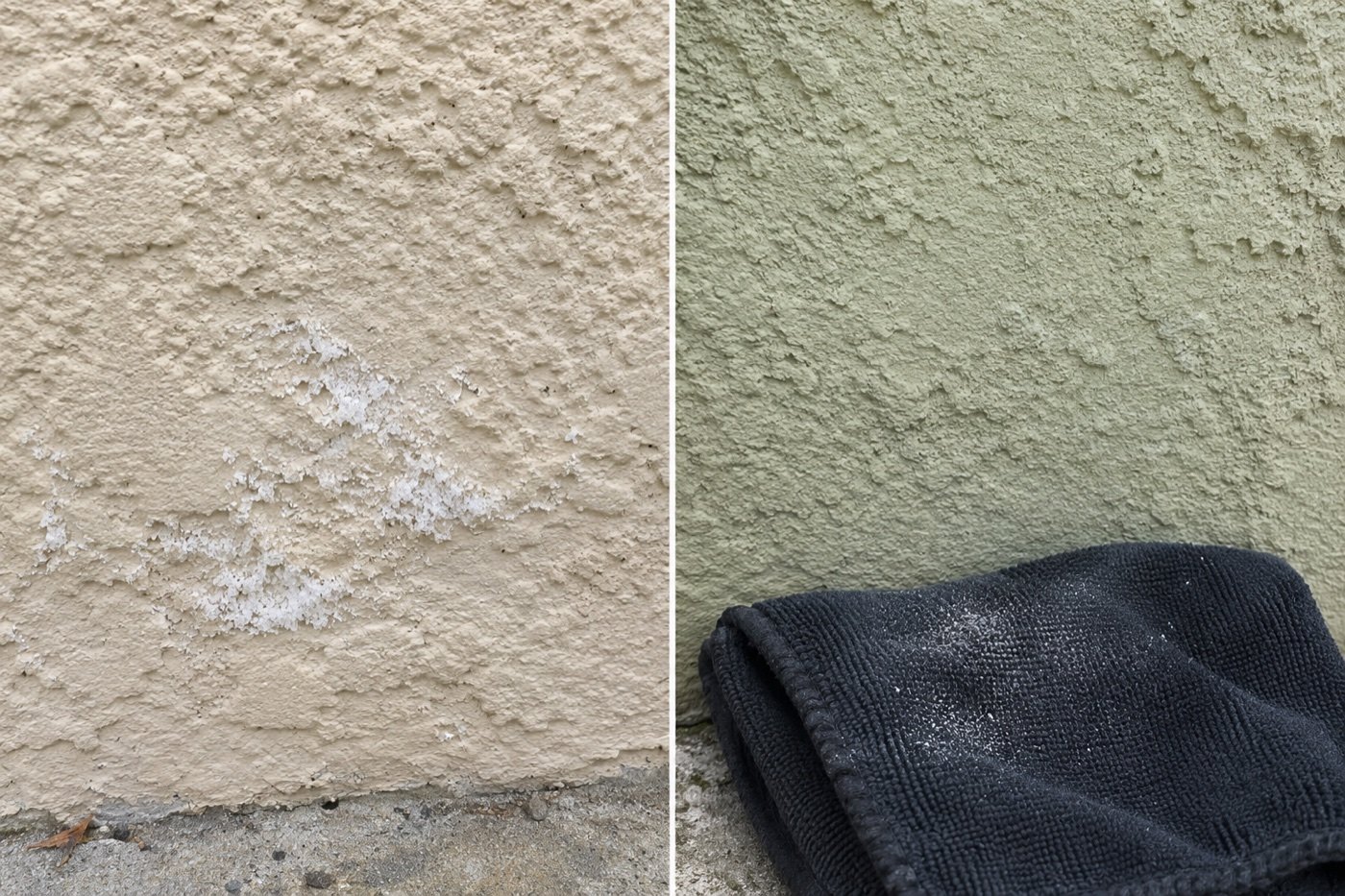
Efflorescence is the name for salt deposits left behind when water moves through cement-based materials and dries at the surface. On stucco it can look like fine white powder or a crust. You might see it along the bottom of the wall, below a window, or near a crack or newer patch.
Chalking happens when the paint film weathers and leaves fine dust on the surface. The paint may look faded across a larger area, and loose powder can transfer to a cloth. Both can be powdery, so pay attention to what’s happening across the wall and how the spot changes over time. Sherwin-Williams on salt deposits · Sherwin-Williams on paint chalking
Compare what you’re seeing
| What you see | What it may point to | What to check next |
|---|---|---|
| White powder or crust that comes back in one low spot | Salt deposits and possible recurring moisture | Watch that spot after rain or irrigation. Check where nearby water runs. |
| Fine dust across a broad area of faded paint | Chalking from the old paint film | Compare it with a sheltered part of the same wall. Note how much of the finish looks faded. |
| Bubbles, peeling paint, or damage beside the white patch | A coating or surface problem that needs a closer look | Photograph the damage and check whether the wall stays damp or the spot keeps spreading. |
| Residue around a patch that was repaired recently | Moisture or salts associated with the repair may be involved | Find out when the patch was done and what materials were used before choosing a coating. |
What should you check after rain or when the sprinklers run?
Start at the bottom of the wall and work your way up. If you see a low band of residue, watch where the sprinkler spray lands. Check whether water pools beside the wall or whether a downspout dumps water right at the base. If the mark starts below a window, look at the sill and the area immediately above the stain from ground level.
Take a wide photo on a dry day, then take another from the same spot after the next rain or irrigation cycle. Note when you see dampness and when the white patch returns. If you can see a sprinkler hitting the wall, redirect the spray and keep an eye on that section. Bring up any recent stucco patch, repaint, or washing when you ask for help. LaHabra’s stucco care guide
Can you wash it off or paint over it?
If the deposit keeps coming back, put the repaint on hold while you figure out where the moisture is coming from. Cleaning may remove the visible powder, but it can return if the wall keeps getting wet. The right cleaning method depends on the stucco, the existing coating, and the condition of the surface. If there’s peeling paint or loose stucco, get the surface checked before choosing a wash or a repaint.
Once the cause has been addressed, the surface needs to be sound, clean, and dry before coating. If the area was patched recently, check the curing and prep requirements for the repair material and coating you’re using. For the rest of the paint job, see what to look for when choosing an exterior coating for South Florida weather. Sherwin-Williams on recurring deposits · Choosing exterior paint in Miami
What photos should you send for a stucco estimate?
- The whole wall. Stand back so we can see how high the patch sits and how far it spreads. Include a window, corner, or doorway if it helps show where the spot is.
- A close-up. Get the white patch and a little of the surrounding paint in the same picture. Include any cracks, bubbles, or peeling you can see.
- The area around it. Show the nearest sprinkler, downspout, planting bed, or spot where water collects.
Add your city, when you first saw the patch, and whether it came back after rain, cleaning, or repainting. Those details help us understand what you’re seeing before we talk through the work.
Watch the 40-second walkthrough
This explainer uses AI illustrations and synthetic narration. A transcript follows the video.
Read the walkthrough transcript
- 0:00
- Seeing white powder on your stucco? Look at where it is and when it comes back.
- 0:08
- Crusty deposits can be salts left behind by moisture. Fine dust can also come from old paint.
- 0:16
- After rain, look for pooling water, sprinkler spray, or a downspout that empties beside the wall.
- 0:24
- Take three photos: the whole wall, the patch up close, and the area where water may be coming from.
- 0:32
- In Miami or Broward? Email ColorMind2 your photos and tell us when the white patch returns.
Want help with your stucco wall?
Ask ColorMind2 for a free estimate. If you’re in the Miami area, send us your three photos and tell us when the white patch comes back. We can talk through your stucco touch-up, exterior painting, or pressure washing needs and help you figure out what to check before the work starts.
Need help choosing the right finish?
ColorMind2 can help with interior painting, exterior refreshes, detail work, garage floors, and color matching.
Ask For An Estimate