
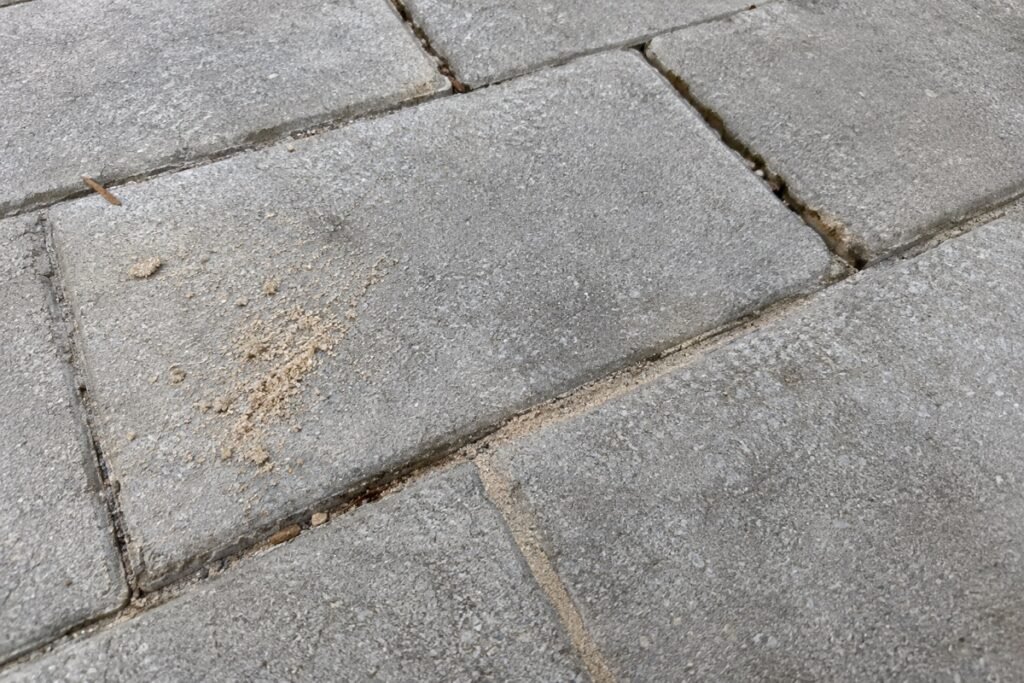
Why Did Sand Come Out of My Pavers After Pressure Washing?
If you see sand on top of your driveway after pressure washing, the spray may have pulled joint sand out from between the pavers. A little loose grit can be surface debris. Deep gaps, rocking pavers, or sand that keeps washing out are signs to look closer before you wash again or seal the driveway.
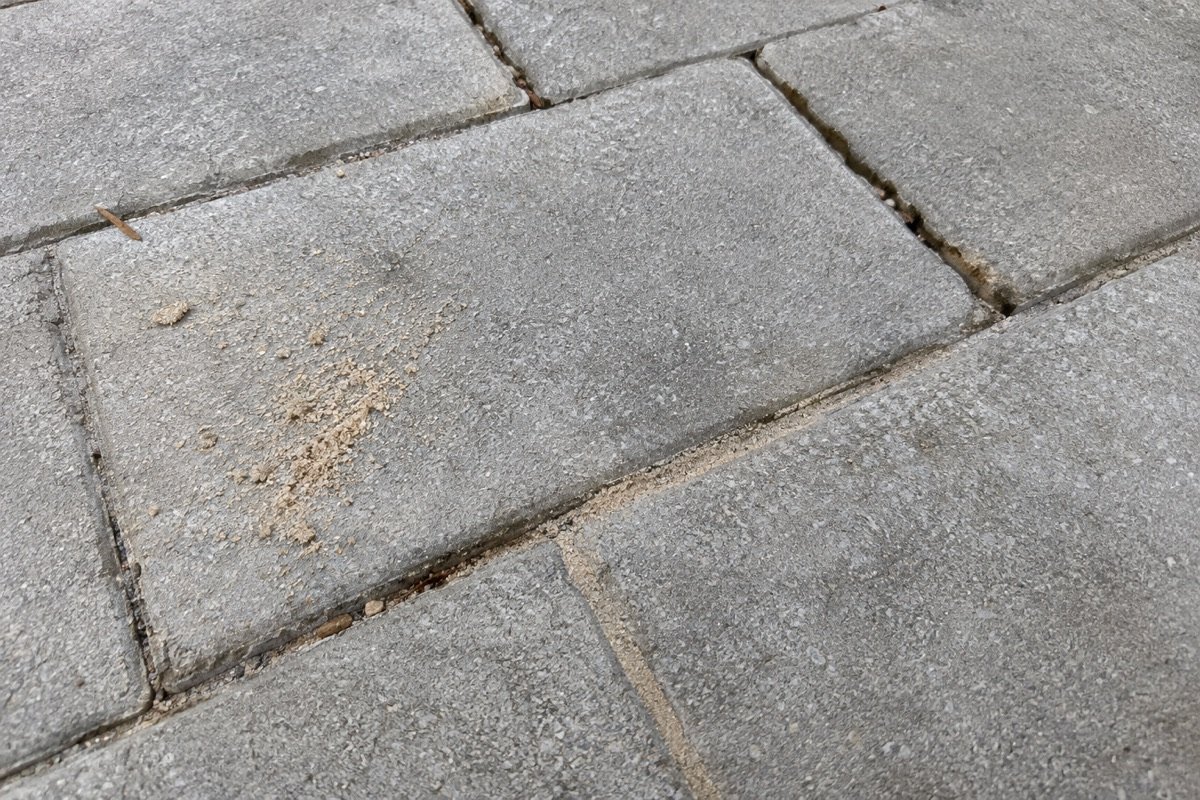
Is it just grit, or did the joints lose sand?
Let the driveway dry and look at a few washed joints beside an area the spray didn’t reach. A few grains on top with firm, filled joints tell a different story from long gaps that have opened up. Check along the driveway edge and where water drains, too. That helps you see whether the problem is widespread or concentrated in one place.
The sand between pavers is called joint sand. The material underneath them is a separate layer. When joint material is depleted, the bedding below can be exposed to washout. On a driveway with moving or sunken pavers, ask for an assessment of the base and edge before assuming a refill will solve it. Unilock paver care guide
| What you see | What to check next |
|---|---|
| A light dusting of sand on top, joints still filled, pavers firm | Sweep the surface and check the joints once dry. |
| Several joints look deep or empty, but pavers sit level | Find out what joint material was used and ask whether it needs refilling or replacement. |
| Pavers rock, sink, or shift near an edge | Ask a paver installer to check the base and edge before washing or sealing. |
| Sand keeps disappearing near the same downspout or drain | Photograph where the water goes and ask about the runoff before replacing sand again. |
Can you refill the joints yourself?
It depends on what was installed. Some joints use loose jointing sand. Polymeric sand contains a binder and has product-specific requirements for joint size, preparation, watering, and drying. Permeable pavers can use a different joint material, so identify the system before buying a bag. Follow the paver and joint-material instructions, especially if the existing joints have partially hardened material or the surface was sealed before. Unilock paver guidance · Techniseal installation guide
Take a picture of the product bag or installer invoice if you have it. If you don’t know what’s in the joints, send a photo of the whole driveway, a close-up of the gap, and a shot of the nearest edge or drain.
Should you seal the driveway after washing?
Check the joints and the condition of the pavers first. Get any needed joint work assessed and check the sealer instructions for prep and drying. Sealer can change how the pavers look. Rocking pavers and repeated runoff call for their own assessment. In Miami and Broward, plan any joint work around the product’s drying and rain requirements. Concrete Masonry & Hardscapes Association · Unilock on sealing pavers
What should you ask before the next pressure wash?
Ask what washing method they’ll use, how they’ll protect the joints, and whether any joint work is included in the estimate. If several areas are already low, point those out before work begins. The nozzle and how the water is directed affect how much joint sand is disturbed. Paver washing and joint sand guidance
Need help with a driveway wash?
If you’re in Miami or Broward, show us the driveway and any loose or empty joints before you book. Tell us if any pavers move so your estimate starts with the right information. Choose Pressure washing in the form.
Call (305) 396-1532 · Email project photos · See our services
Attach photos to your email or use the estimate form to describe your project.
Need help choosing the right finish?
ColorMind2 can help with interior painting, exterior refreshes, detail work, garage floors, and color matching.
Ask For An Estimate