
Why Is My Kitchen Cabinet Paint Peeling Around the Handles?
Peeling paint around a kitchen cabinet pull usually calls for a closer look at where the paint lost its grip. Around the handles, hand oils, cleaning residue and repeated contact are common things to check. If several doors are lifting at the edges or peeling in sheets, find out which layer is failing before paying for touch-ups or another coat.
How can you tell whether it’s wear or peeling?
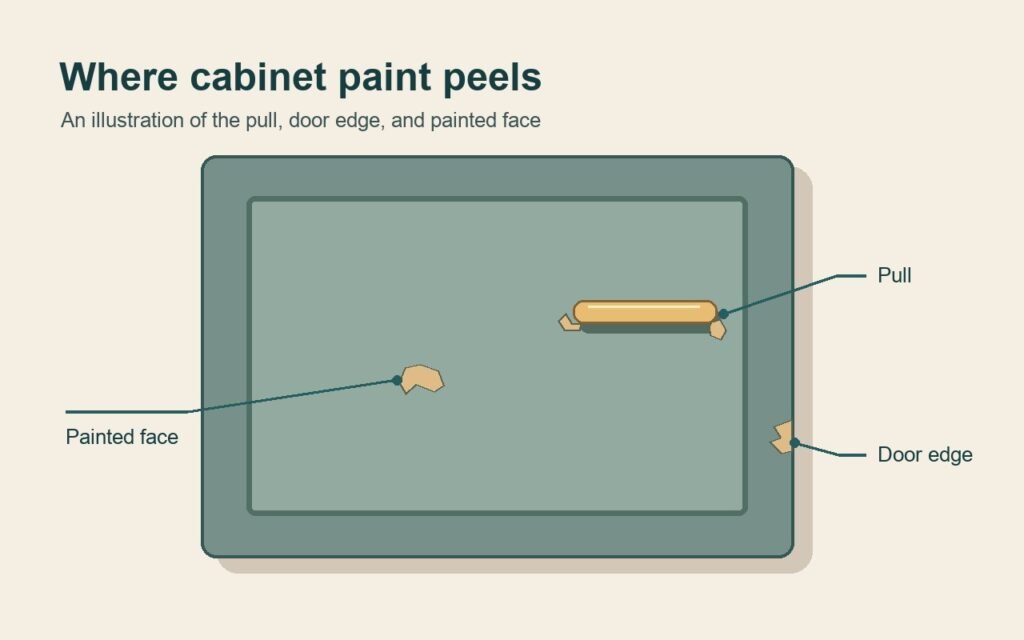
Look at the edge of the spot in daylight. A worn patch can look dull or thin around the place you grab every day. A peeling spot has a raised edge or a loose film with another surface visible beneath it. If the paint damage is a narrow line that follows the base of a loose pull, check whether the hardware moves during normal use. Photograph the area while the door is open and again with it closed so the estimator can see where the handle sits in relation to the damage.
Look across the kitchen next. A single pull next to the stove may have a different history from doors on the other side of the room. A finish that lifts on seldom-used doors deserves a closer look at cleaning, preparation and the existing coating. Sherwin-Williams’ cabinet painting guide explains why it recommends removing hardware and cleaning off grease and oils before painting.
When might a touch-up make sense?
- A small chip and firm edges around it. Ask whether it can be blended and whether matching paint is available.
- Several pulls have peeling edges. Compare the affected doors and ask an estimator to look at the bond of the existing finish.
- Door edges are swollen or the surface layer is lifting. Have the door material assessed before deciding whether to refinish or replace that part.
- Paint rubs off where two doors meet. Show where the doors touch and discuss adjusting the hardware as part of the repair.
Even with the original color, a touch-up can show if the cabinet finish has changed over time or the repairs have a different sheen. Before undertaking a larger repair, ask what a trial on one door would tell you. If the rest of the coating is lifting, a spot repair still leaves the wider problem.
What should a refinishing estimate explain?
Ask what the doors are made from and how the current finish will be checked. A plan for painted wood can differ from one for a laminate or a wrapped door. Ask whether the scope includes cleaning around pulls, removing hardware, addressing loose coating, preparing glossy surfaces and selecting a primer compatible with the door and the planned finish. Benjamin Moore’s cabinet paint guidance covers preparing glossy surfaces and choosing a suitable primer.
The estimate should identify the surfaces included. Door faces, backs, frames, drawer fronts and exposed cabinet ends are separate surfaces. If you’re changing pulls, decide before refinishing whether new holes must be drilled or old holes filled. Ask when handles can be reinstalled and when the finish will be ready for normal cleaning. Use the instructions for the coating being applied to set that timeline.
What should you photograph before asking for help?
Send a wide photo of the cabinet run, a close-up under good light showing the damage next to the handle, and one picture showing the edge of an affected door or drawer. Tell us whether it started after a repaint, how many doors are involved, and whether you know the previous paint or cabinet material. Those details help us discuss whether to start with a small repair or assess a wider refinishing scope for your Miami or Broward kitchen.
Want help with your project?
Show ColorMind2 which doors are affected and where the paint is lifting.
Need help choosing the right finish?
ColorMind2 can help with interior painting, exterior refreshes, detail work, garage floors, and color matching.
Ask For An Estimate