
Why Is My Garage Floor Coating Peeling Under the Tires?
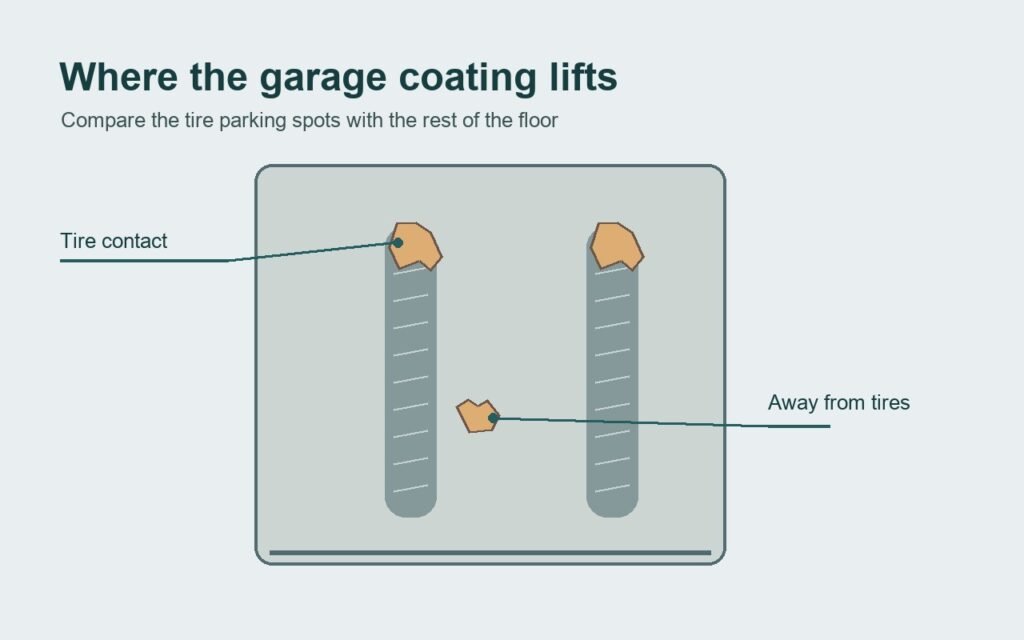
If your garage floor coating is peeling exactly where you park, start by checking whether the damage follows the tires or shows up elsewhere, too. Tire contact can pull up a coating that has a weak bond or has been driven on too soon. Flaking away from the tires calls for a closer look at the concrete, moisture and surface preparation before you put anything new on top.
What does the pattern tell you?
Move the car out and compare the four parking spots with a part of the floor that rarely sees traffic. Look for bare concrete, a ragged edge or a shape that matches the tread. If the affected spots line up with where the car sits, tire pickup is one possibility. Also note when you first parked on the coating and whether the peeling started soon after installation or after months of use. UCoat It’s explanation of hot tire pickup
If you see the same failure beside a wall, in a corner or across the open floor, ask the installer to look beyond tire heat. Old sealer, oil, dust or a smooth slab can interfere with adhesion. Damp areas and powdery deposits may point to moisture, but appearance alone can’t establish where it came from. Sherwin-Williams’ guide to peeling concrete coatings
What should you look at before asking for a repair?
- Peeling follows the tires. Share a photo with the vehicle out of the garage and say when you resumed parking.
- Sheets lift across several areas. Tell the estimator if the slab was previously painted or sealed and ask how the existing coating will be assessed.
- There are bubbles, recurrent damp areas or white deposits. Note where they appear and whether they change after rain. Ask how the slab will be checked before coating.
- Damage starts at the threshold. Photograph the edge and any water that crosses it. Tell the estimator which areas also get direct sun.
Can you patch just the parking spots?
A localized repair is worth discussing if the surrounding coating is well bonded, the cause can be addressed, and a compatible product is available. The repaired area can still look different if the rest of the floor has faded or if the sheen or texture is hard to match. If the coating lifts in several places or the slab keeps showing signs of moisture, ask for a broader assessment before buying a patch kit. The condition of the existing floor should determine whether a patch or a larger recoat makes sense.
What should a garage coating estimate spell out?
Ask what will be removed, how the sound surface will be prepared, and which garage-rated coating the contractor plans to use. If water is part of the concern, ask what the assessment includes and whether any moisture work would be a separate item. Finally, get the return-to-service instructions for the proposed product and expected conditions. Ask for separate times for walking, moving items back and parking. A floor that feels dry can still need more time before it is ready for vehicle tires.
Which photos will help explain the problem?
Take one photo of the whole floor from the garage door, one close-up that shows a peeling edge beside an intact area, and one photo of the nearest threshold, drain or wall if that area is affected. Include your Miami or Broward city, when you first saw the peeling, and the coating name or invoice if you have it. You can also note whether the spots appeared after rain, washing or the first time you parked.
Want help with your project?
Show ColorMind2 where the coating is lifting so we can discuss the preparation and repair options for your garage.
Need help choosing the right finish?
ColorMind2 can help with interior painting, exterior refreshes, detail work, garage floors, and color matching.
Ask For An Estimate